What exactly is industrial interior design? At its core, it draws inspiration from old factories, warehouses, and urban lofts. It celebrates raw materials, open layouts, and functional beauty. Exposed brick, concrete walls, metal pipes, and reclaimed wood are not flaws to be hidden, in fact they are features to be celebrated.
In this guide, we will cover everything you need to know to bring this look into your Lahore home or workspace. From foundational elements to room-by-room ideas, color choices to furniture picks, this is your complete resource for achieving a stunning industrial theme interior design that works beautifully in the local context.
Core Principles: What Industrial Interior Design Is Really About at Its Heart
Before you start knocking down walls or ordering metal furniture, it helps to understand what industrial design is actually built on. Because this is not just a trend, it is a design philosophy.
Prioritizing Functionality in Design
In industrial spaces, nothing exists purely for decoration. Every element has a job to do. A shelf holds books. A pipe carries something. A light illuminates. But because these elements are designed and placed with intention, they become beautiful. This function-first mindset gives industrial style interior design its realistic, practical and functional appeal.
Using Exposed Materials and Natural Finishes
Polished marble and smooth plaster have their place but not here. Industrial design leans into imperfection. Rough textures, visible joints, unfinished surfaces these are not signs of poor craftsmanship. They are purposeful choices that create a space with depth and originality.
Creating Open and Functional Spaces
High ceilings, open floor plans, and minimal partitions create a sense of freedom and flow. This openness is both practical and aesthetic as it makes spaces feel larger and allows different zones to coexist without feeling messed.
Building the Foundation:
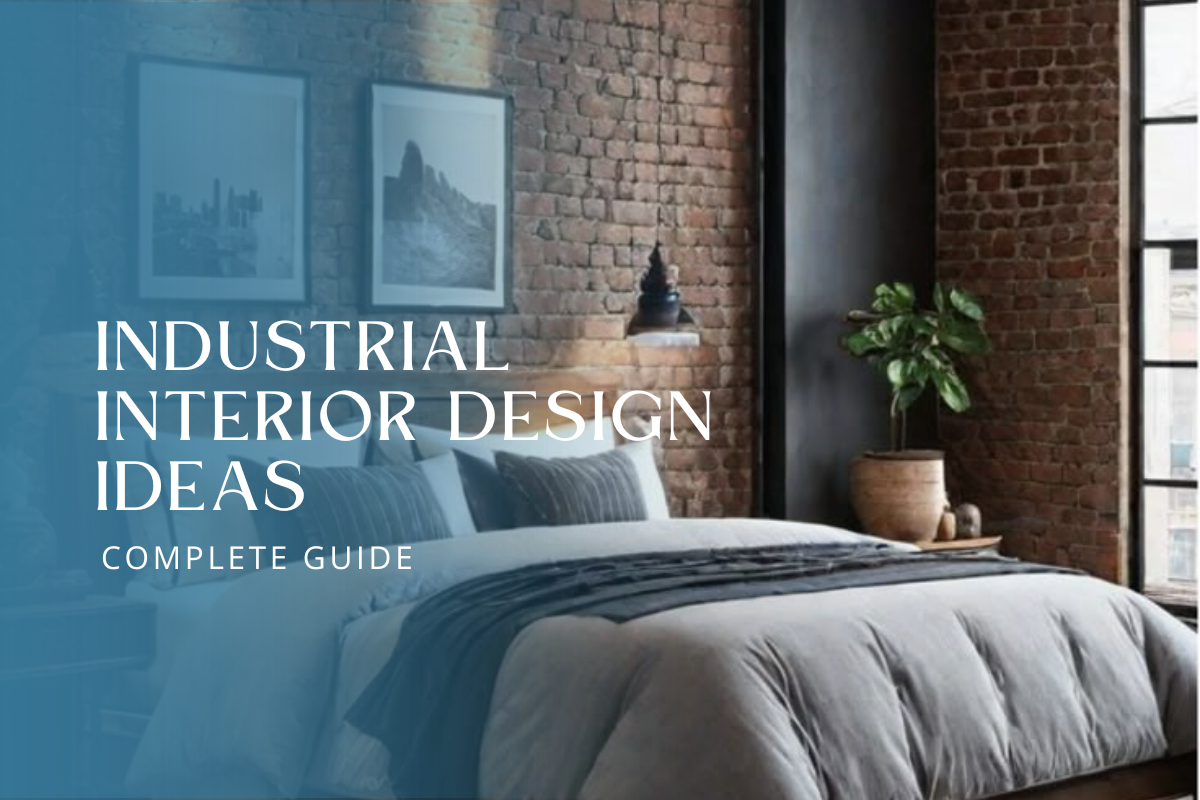
Before any furniture is chosen or any light fixture is hung, the real work of industrial design begins with the bare bones of the space itself. The walls, floors, and structural elements are not just a backdrop in industrial interiors, they are the main event. If there is one image that captures industrial interior design, it is an exposed brick wall. In Lahore, where many older buildings already have brick structures beneath layers of plaster, uncovering these walls can be one of the most rewarding things you do in a renovation.
The Industrial Color Story:
Color in industrial design is not about playing it safe, it is about being realistic. The foundation of any industrial color scheme is built around muted, natural tones, deep charcoals, warm greys, raw umbers, soft terracottas, and off-whites.
A single deep teal cabinet in a kitchen, a rust-orange throw pillow on a grey sofa, or a forest green pendant light above a dining table these deliberate touches of color do not disrupt the industrial aesthetic, they humanize it.
Furniture and Décor:
In an industrial space, furniture is not just functional, it is a statement. The furniture vocabulary of industrial chic interior design is built around a handful of key materials: raw or reclaimed wood, brushed or blackened metal, aged leather, and heavy-duty canvas.
Think dining tables with thick oak tops and raw steel legs, shelving units made from scaffolding pipe and reclaimed boards, and leather sofas with visible stitching and a slightly worn quality.
Lighting the Industrial Way:
Lighting is one of the most important elements in industrial interior design. Features like Edison bulbs, metal pendant lights, and exposed fixtures don’t just provide light,they add character to the space.
A well-designed setup uses layered lighting, combining ambient, task, and accent lights for both function and mood. Natural light also plays a key role, so keeping windows open or minimally covered helps brighten the space and enhances the overall industrial look.
Adding Warmth:
This is where many industrial spaces go wrong,too much rawness can make a home feel cold and uninviting. Adding textiles brings the needed warmth without losing the industrial edge. Stick to natural materials like wool, linen, cotton, and jute in neutral tones to keep the look balanced.
Simple additions like a textured rug, linen curtains, or a few cushions can instantly soften hard surfaces like concrete and metal. The key is layering and combining a few subtle elements to create a space that feels comfortable, balanced, and lived-in.
You would also like to read: Scandinavian Interior Design Ideas
Industrial Interior Design Ideas for Every Space in Your Home
Understanding industrial design principles is one thing and applying them room by room is where it gets exciting. Here is how to bring the look to life in each area of your home, with specific ideas suited to the way people actually live in Lahore.
Industrial Living Room
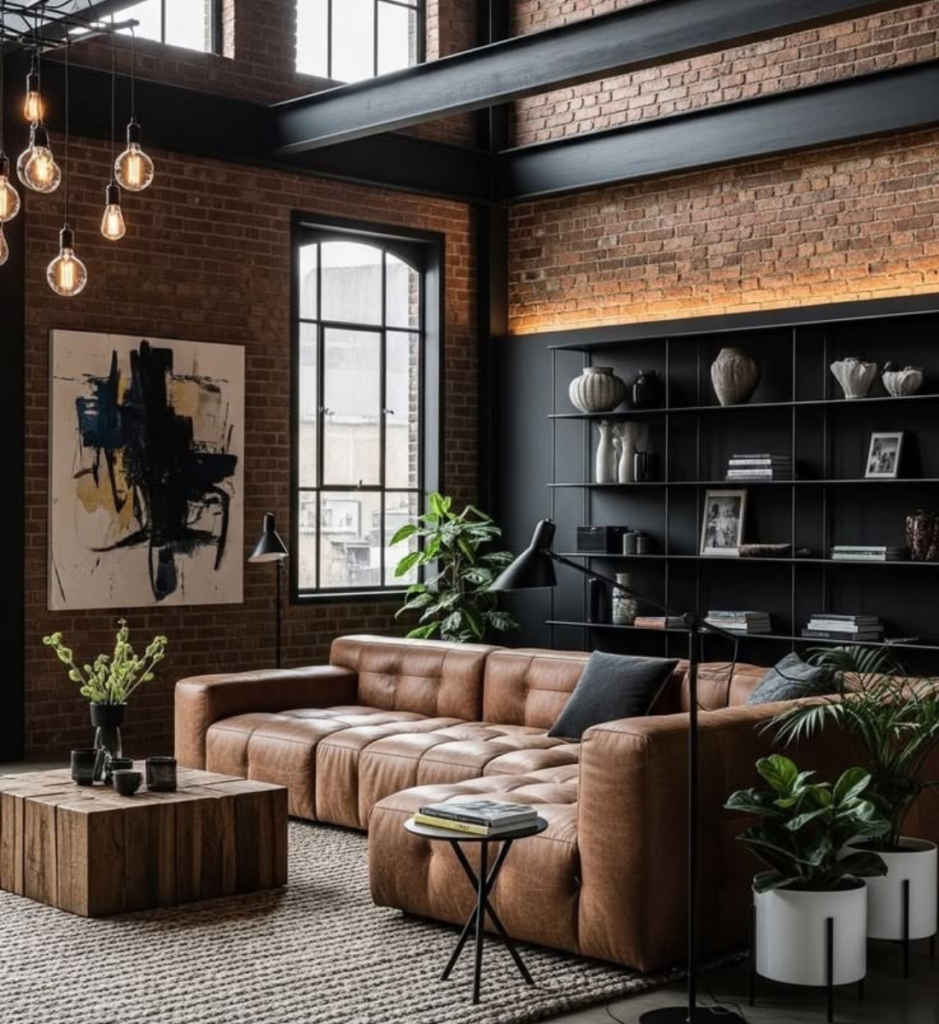
The living room is where industrial design stands out the most. Start with a brick or concrete feature wall, then add a comfortable sofa in leather or a dark textured fabric. Pair it with a wooden coffee table with metal details and simple open shelving.
Lighting should be layered, a statement pendant light with floor lamps creates a warm, inviting feel. Finish with a neutral rug, a few plants, and minimal decor.
Industrial Kitchen
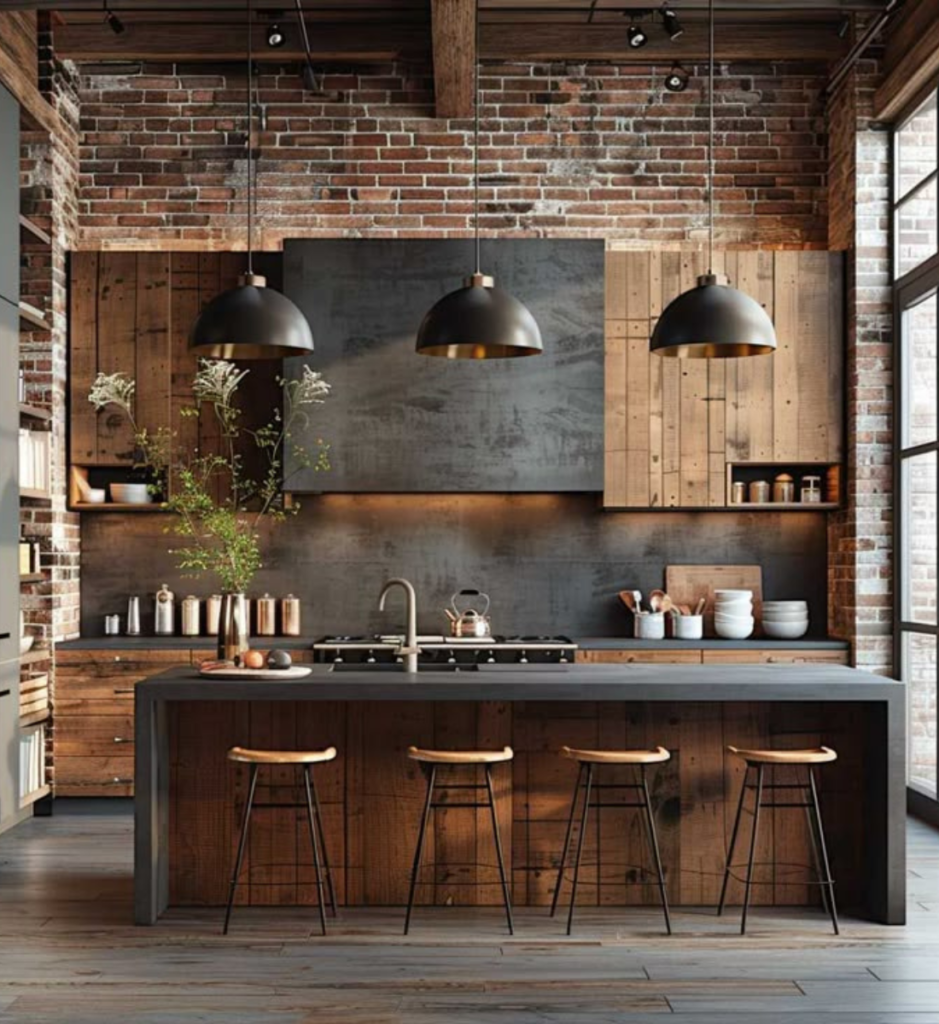
The kitchen naturally suits industrial design because it already focuses on function and materials. Use open shelving with metal brackets and wooden planks to create a simple, practical look.
Choose durable surfaces like concrete, granite, or stainless steel for countertops, and stick to appliances in steel or matte black. Add pendant lighting and a brick or concrete backsplash to complete the style.
Keep in mind that in Lahore’s dusty environment, open shelving needs regular cleaning but it also encourages better organization and adds strong visual appeal.
Industrial Dining Room
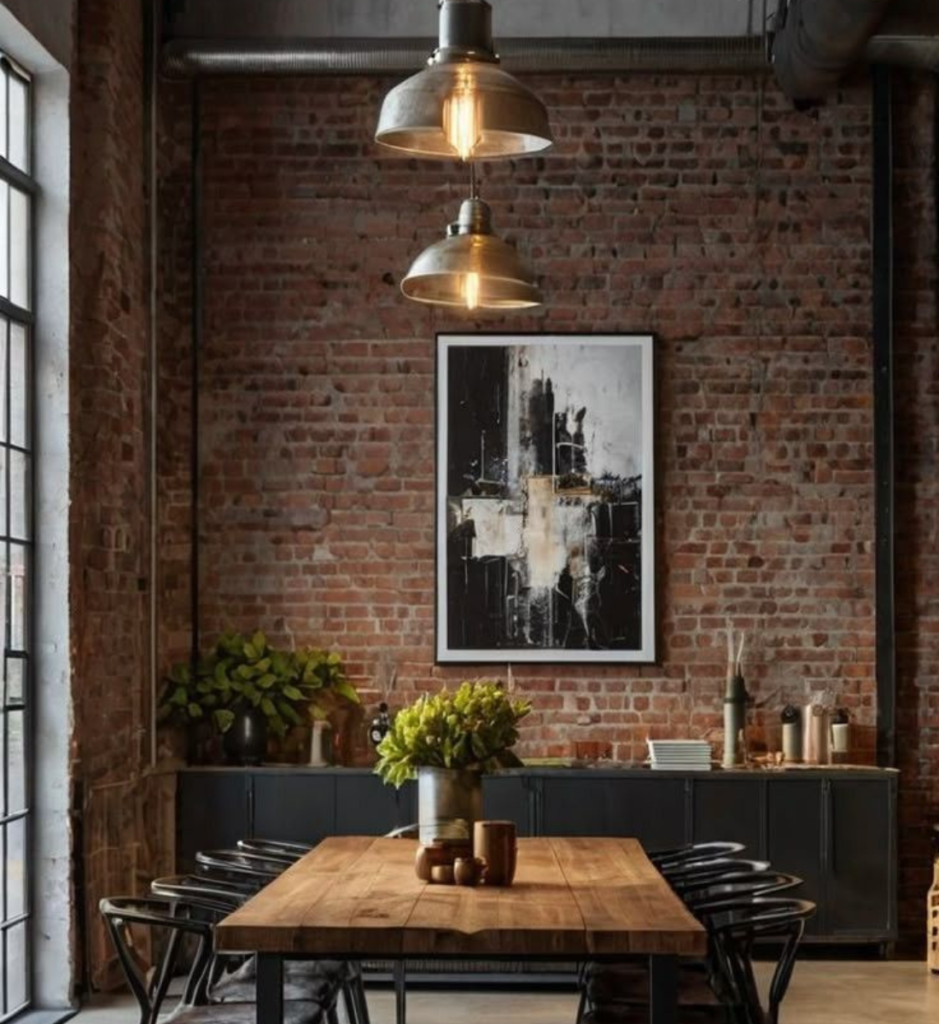
The dining area is where industrial design can feel bold and eye-catching. A large wooden table with metal legs acts as the main focal point, paired with oversized pendant lights above for both style and proper lighting.
Mix seating like metal chairs with leather or fabric seats alongside a wooden bench to add variety and a relaxed feel. Complete the space with a simple metal-and-wood sideboard and minimal wall décor, keeping the look clean and welcoming.
Industrial Bedroom
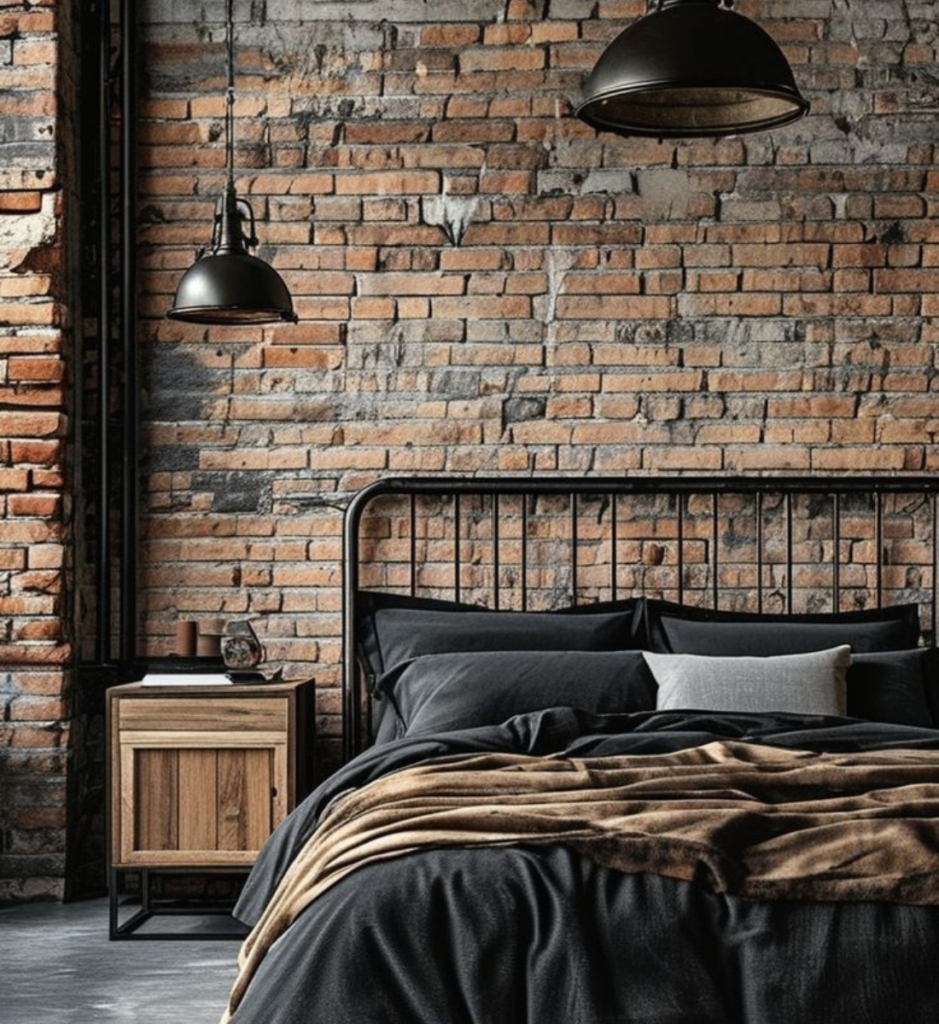
Designing an industrial bedroom is all about balancing raw elements with comfort. Start with a brick or concrete wall behind the bed, then choose a simple metal or wooden bed frame.
Soften the look with layered bedding like linen, cotton, and textured throws to make the space feel warm and inviting. Use soft, warm lighting like pendant lights beside the bed, and keep furniture and décor minimal. The goal is a calm, uncluttered space that still feels comfortable.
Industrial Home Office
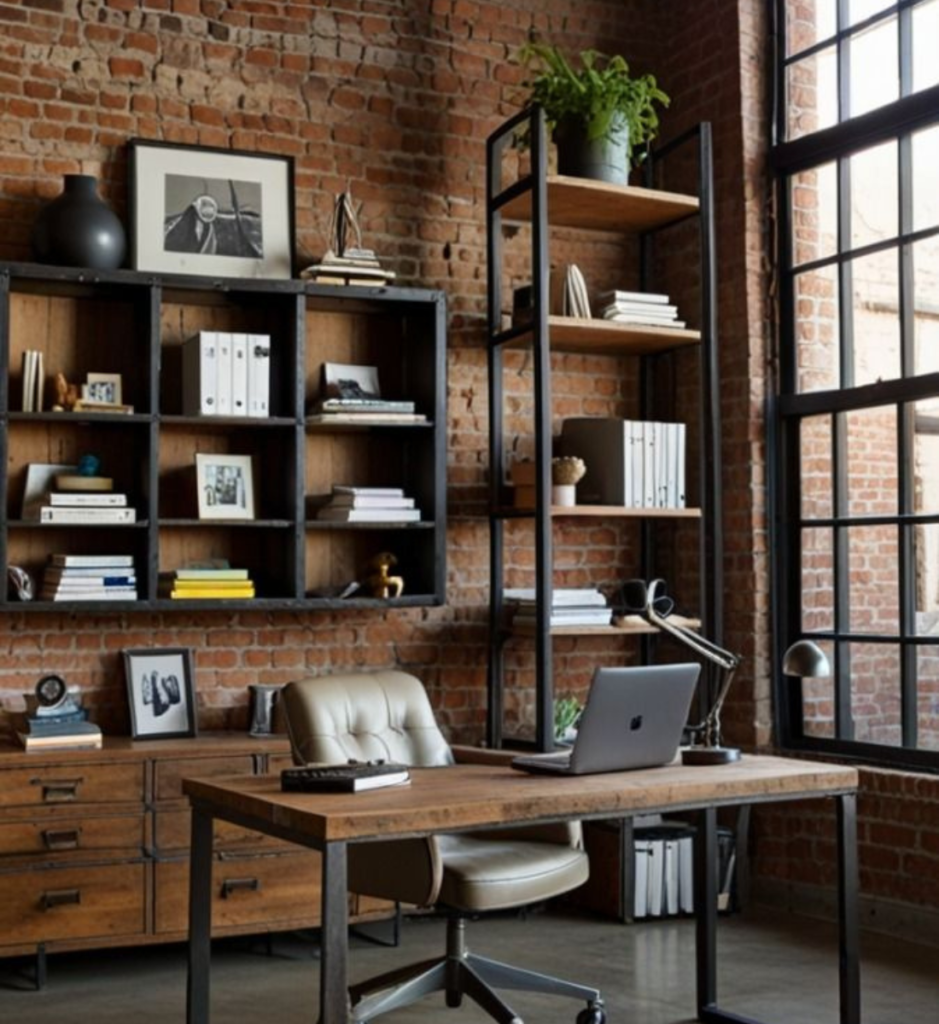
An industrial home office is a natural fit for the style, as it’s rooted in functional workspaces. Use a sturdy desk in wood or concrete with metal legs, paired with open shelving for storage. Add focused task lighting and a comfortable chair in leather or durable fabric.
Keep the setup simple and clutter-free. A clean and simple space not only matches the industrial look but also helps improve focus especially in a busy home environment.
Contemporary Industrial Design: Making the Look Work in Lahore’s Unique Context
Industrial design didn’t originate in Lahore, it comes from old factories in cities like New York and London, but it can still be adapted really well here if you work with the local context instead of copying it blindly.The main idea is to design with the building, not against it. Instead of forcing a look, you read the space and bring out its industrial potential.
On the practical side, Lahore is actually well equipped for this style. Local metal workshops can make custom furniture and fittings, timber markets offer solid wood options, and concrete specialists can handle floors and walls.
Conclusion:
Industrial interior design isn’t for everyone, and that’s exactly why it stands out. It requires confidence to embrace raw finishes, exposed materials, and simpler, more honest surfaces instead of covering everything up. But when done right, it creates spaces that feel more real and grounded than overly polished interiors.
In a city like Lahore, with its rich layers of history and textured architecture, this style fits naturally. It works with the character of the city rather than against it, creating spaces that feel authentic and lived-in instead of artificial.
Whether you’re designing a new space or renovating an existing one, the industrial approach offers plenty of flexibility. The key is to adapt the principles to your own needs and not be afraid of bold, simple choices, that’s what gives the style its true identity.
Why Choose Us for Industrial Interior Design Styles for Homes?
At Home Interior, we specialize in industrial interior designing in Lahore, combining creative design with a deep understanding of the city’s architecture, climate, and materials. Our goal isn’t just to make your space look good, it’s to create interiors that are functional, durable, and perfectly aligned with your lifestyle.
If you’re ready to transform your home or workspace into something truly distinctive, now is the time to take the next step. Book your consultation today and let’s create a space that stands out.
Frequently Asked Question
Is industrial design suitable for Lahore's hot climate?
Yes, materials like concrete and stone floors actually help keep spaces cooler, making industrial design a practical choice for Lahore’s warm summers.
Is industrial interior design expensive?
Not necessarily. It can actually be quite budget-friendly because it often uses raw, unfinished materials like exposed brick, concrete, and metal instead of expensive decorative finishes. Costs mainly depend on how customized you go.
Can I incorporate industrial elements into an already furnished space?
Yes, even a few key additions like an exposed brick wall, metal lighting fixtures, or a reclaimed wood shelf can introduce the industrial aesthetic meaningfully.
Which rooms benefit most from industrial interior design?
Living rooms, kitchens, and home offices tend to show the most dramatic transformation, though the aesthetic works beautifully across every room.
Can I mix industrial style with traditional Pakistani decor?
Yes, and it often works really well when done carefully. Industrial design pairs nicely with traditional elements like carved wood furniture, handmade textiles, or local rugs.